The ROI of Resilience: Why your reaction matters more than your talent
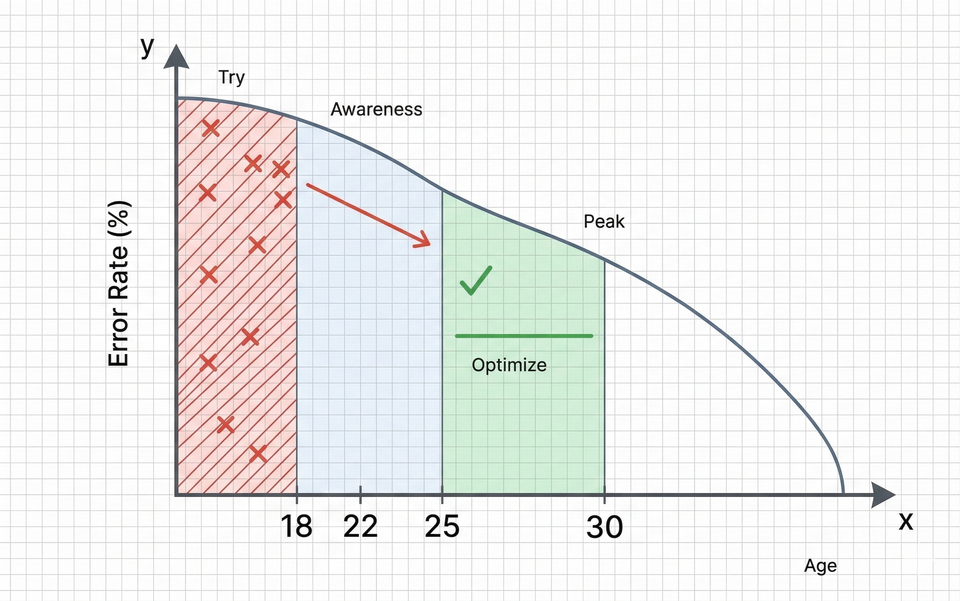
There's a version of my story that looks clean on Linkedin - a fully funded scholarship in New Zealand, a solid career track in product and analytics, a professional who figured it out.
But behind that version is another one: the version where I fall into deep valleys multiple times with no safety net and no one coming to pull me out. Every single time, I had to find my own way back to the surface.
That journey didn't just teach me about ambition. It taught me about resilience - the kind that doesn't come from motivational quotes but from sitting alone in uncertainty for many years and choosing to move forward anyway. And there's one thing resilience has shown me, it looks like this: Your career doesn't rise or fall on talent alone. It rises or falls on how you react when things go wrong.
Throughout my career, I've come to believe that the trajectory of our professional lives comes down to 2 things: the decisions we make and the actions we take in difficult moments. And more often than not, the real damage we cause to our own reputations or to our teams doesn't come from a lack of skill. It comes from emotional and imbalanced thinking.
The fix isn't complicated, but it demands something most people aren't willing to do: self-reflection.
Reflect and learn from every single mistake
Resilience isn't about never falling. I know that better than most. It's about what you do after you fall.
Most of successful professionals aren't the ones who avoid mistakes, they're the ones who sit with their mistakes long enough to actually learn from them and not to punish themselves. In addition, they're willing to ask:
- What went wrong?
- What was the root cause?
- How can we prevent us from this mistake in the future?
This is the habit that changed everything for me. Every valley I fell into during my journey became a sprint retrospective where I forced myself to look back honestly instead of running forward blindly.
Make reflection a non-negotiable. After every moment where things didn't go the way you wanted - take a beat and extract the lesson. Write it down if you have to. Over time, you'll notice something powerful: you stop repeating historical errors and your decisions get sharper. You start trusting yourself because you've earned it.
When you're wrong, remove the ego and apologize
This is the step most people skip (many associate to junior level), and it's the one that matters most.
Here's a truth I learned the hard way: sometimes, after you pause and reflect, you'll realize the problem wasn't the situation - it was you. And in fact, your reaction might have impacted someone who didn't deserve it.
When that happens, the ego will whisper a hundred reasons why you shouldn't apologize. Ignore every single one of them.
A genuine apology is one of the high-leverage actions you can take for your career. It's time to tell people about your own intention:
- I see what I did.
- I've found the root cause.
- It's my responsibility to fix it.
- I'm going to do better.
That's not weakness. That's the definition of senior-level strength.
The mark of a great leader that I used to work with
Exceptional managers rarely lose their patience. I know this because I've studied them, and because the moments I fell hardest in my own journey were the moments I reacted fastest.
When things are getting more ridiculous, great leaders don't waste energy looking for someone to blame. They analyze the problem and keep emotions out of the room. Only after a clear observation, they make their decisions. And when they discover their own role in the failure, they own it without hesitation.
Methodical thinking will always outperform anger. Yes, always.
A final thought from someone who kept getting back up
I learned the patience in the valleys - the ones where the scholarship felt impossible, where the money ran out, where the loneliness was louder than the ambition. Every time I climbed back out, I came back a little slower to react, a little quicker to reflect, and willing to say "That's my fault" when I was wrong.
Two habits, that's all:
- Reflect and learn from every mistake.
- Remove the ego and apologize when you're wrong.
Over time, you'll realize something remarkable: true patience which is a rare and powerful virtue.
Stay resilient.